-
Lodge + Camping twin sharing bed basis during the trek
-
Kathmandu
-
Available
-
Any
-
4-5 Hours per Day
-
2-15
-
Bus,Scorpio,Car
-
4493m
-
English, Nepali
-
Sept – Dec, March – May
-
All Meals ( lunch, Dinner and Breakfast ) with cup of Tea/ Coffee during the Trek
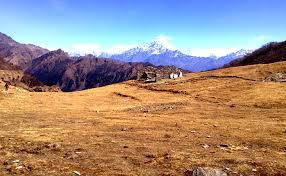
Dhorpatan Trek lies in the Dhaulagiri Region. It is the only one spot in Nepal where licensed hunting is permitted. It is less visited by the beaten so it is known as off the beaten path trekking trail.
Highlights
- Breathtaking views of Annapurna, Dhaulagiri, Fishtail, and Manaslu
- Rich biodiversity of the hunting reserve with diverse terrain and climates
- Chance to engage in controlled hunting
Our journey begins with a nine hour’s drive from Kathmandu to Beni. The trail passes through Trisuli River then after we drive to Marshyangdi River and small hill towns to the Seti River that takes directly into Pokhara. The drive from here goes through uphill into zigzag road all the way to Nau danda. It than goes up through Nayapul. On the way we can view fabulous Mountains like: Annapurna South, Fish tail, green hills, terraces and villages. To reach Beni, our drive moves along the Kaligandaki River. Overnight at lodge
After breakfast, we drive three hours to reach Darbang. In Darbang, people are engaged in making Khukuri. “Khukuri” is the curved Nepali weapon used as weapon tool. In every house, of the village at least one person has adept the skill of Khukuri making. We can see Dhaulagiri Himal from Dharapani.
On the following day, we will have a pleasant walk. The wonderful view along the trail will make you always refreshed to walk further. This remote area with stream and gorges will be a wonderful place to explore. The beautiful landscape added beauty. Overnight at Lamsung.
We start our day early and pass through several rhododendron and oak forests. The Himalayan vistas include Dhaulagiri, Gurju, Chure, and Putha among many others. We finally reach Jaljala where we spend the night at an elevation of 3386 meters.
On this day, we descend to Khahare Khola and cross it. Then we continue along the bank of a stream and walk past thick forests. We finally reach Dhorpatan.
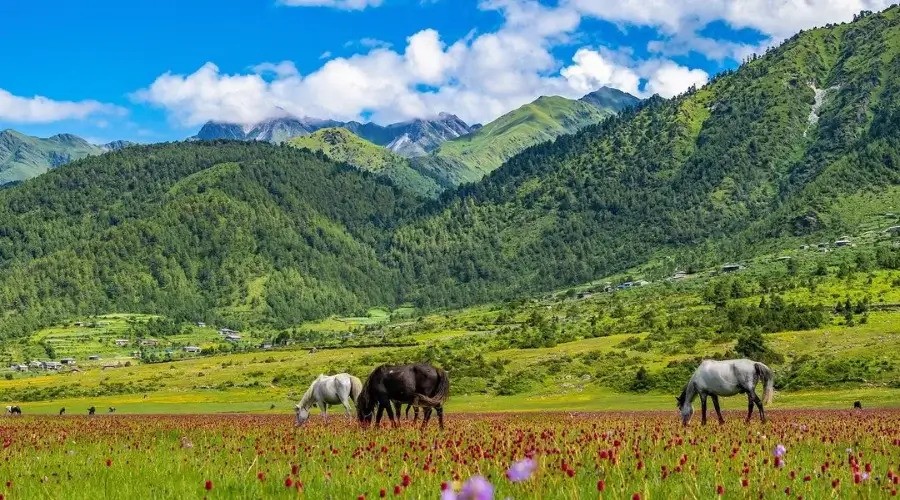
Dhorpatan is a beautiful place in the midst of a forest. We explore Dhorpatan wildlife reserve with diverse flora and fauna. We can spot animals like Leopard, Thar, Black bear, Ghoral, barking deer and plants like rhododendrons, fir, juniper, birch, oaks, spruce, pine and many other species.
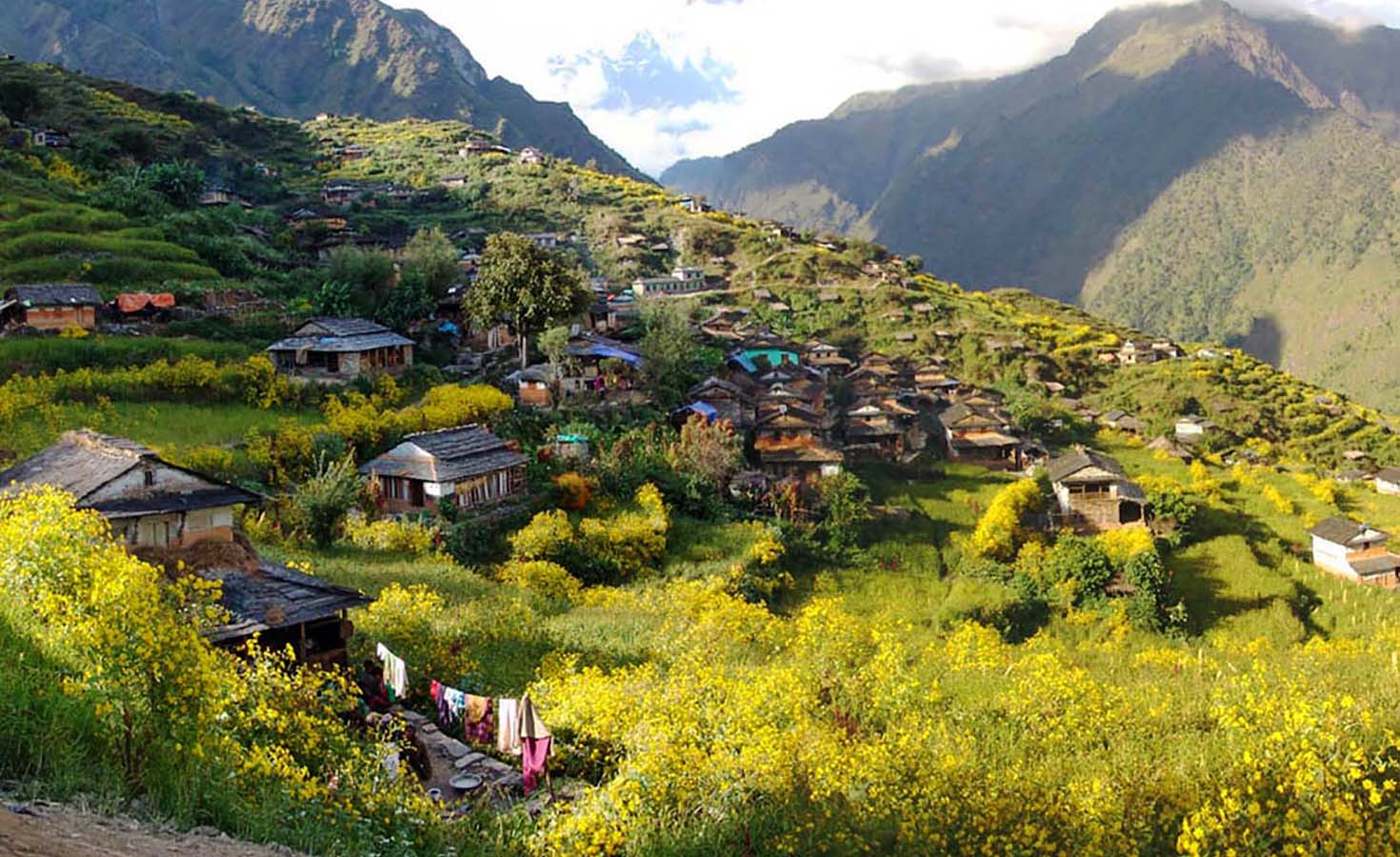
The inhabitants of the area are hill tribes and Tibetans who mainly depend on animal husbandry and farming. The settlements are famous for their wooden roofs, monastery, prayer flags and chortens. We enjoy the traditional lifestyles of the people as well.
After the excursion, we make our way towards Phagune Phedi. We ascend for a while with the beautiful views of mountains, forests, and landscape. We spend the night here at an elevation of 4493 meters.
Early in the morning, we make a short hike to Phagune hill and enjoy the Himalayan vistas. Then, we trek down to Jungle camp and spend the night there.
The trek from jungle camp is easy as it passes through forests and streams on a flat land. After six hours, we reach Gurjaghat at an elevation of 3000 meters where we spend the night.
The trail ascends as we begin our trek early in the morning. We have lunch and then the trail descends through forests and gorges. Finally, after six hours of walking throughout the day, we reach Patichaur at an elevation of 900 meters. We spend the night here.
On this day, we have a pleasant walk for about two hours. Then we ascend and descend through forests and gorges to reach Darbang. Once we get there, we travel to Beni which takes about three hours of scenic drive. We spend the night in Beni at an elevation of 850 meters.
The drive from Beni to Pokhara is a scenic one with tantalizing views of the mountains. After we reach Pokhara, we have ample time to explore the valley. We can visit the beautiful tourist sites or go for boating in Phewa Lake. An evening stroll along the lakeside area is a must. We spend the night in Pokhara.
From Pokhara, we drive to Kathmandu which takes about 6-7 hours. We can visit the famous tourist hub, Thamel, in the evening. We spend the last night of the trip in Kathmandu.
Includes
- Accommodation
- 2 nights in local guesthouses/homestays (twin-sharing, simple facilities)
- Transport
- Local bus Kathmandu ↔ Charikot (nearest point)
- Local jeep sharing Charikot ↔ Sailung/Kalinchok
- Airport pick-up in Kathmandu
- Meals
- Not included – participants pay directly at guesthouses
- Guide
- English-speaking tour/trekking guide for 3 days
- Permits & Fees
- Kalinchok temple area entry fees
- Extras
- Pre-trip briefing
- Basic first aid kit
Exclude
- Meals in Kathmandu and during the tour
- Hotel in Kathmandu
- Personal expenses (snacks, drinks, donations at temples)
- Travel insurance (recommended)
- International airfare & Nepal visa fees
- Tips for guide & driver
- Costs due to delays/weather/natural disasters
FAQs
Depending on what you plan to do, the Himalayan regions are accessible throughout the year although some periods are more suited to certain activities. Nepal has a typical monsoon 2 season year. The dry season is from October to May and the wet season or monsoon from June to September. The best time to trek is from October to May, with the first two months of the dry season (October and November) being the ideal period for trekking in Nepal. The air, freshly washed by the monsoon rains, is crystal clear, the mountain scenery is superb and the weather is still comfortably warm. December, January and February are still good months to travel but the cold can be bitter at high altitudes. March and May offer better weather when trekkers can see superb wild flowers, particularly in Nepal’s wonderful rhododendron forests. Towards the end of April and beyond, building up to the monsoon, it can start to get quite hot and at times uncomfortable. May and June are very hot and dusty and can be uncomfortable for anyone not used to this type of climate – and for those who are. The monsoon arrives mid June to September with heavy rains and cloud. It usually rains every day but not all day. Whilst some treks are still possible it is not the best time to visit for trekking or travelling around and plans can be disrupted according to weather conditions. At the end of the monsoon (August and September) there are lots of interesting and lively festivals.
The himalayas of Nepal offers various options that vary in difficulty, length, budget and trek style. Ultimately, each and every kind of trekking trip will be one of your life time most rewarding experience. There are a various number of treks which are famous for its uniqueness, natural beauty, and difficulty. As Nepal is not only home for high mountains but also it has never ending diversified culture and geography. If you have enough time, then the Everest Base Camp and the Annapurna Circuit are the best trekking trail of Nepal. Besides this, there are a number of trails all around the country. If you have limited time, you can trek to Langtang-Helambu region which is very close to Kathmandu valley or also any parts of Annapurna region which is north of Pokhara. Restricted trekking areas such as Manaslu region, Mustang region and Dolpo region are also another famous trekking trail of Nepal. These beaten trekking trails provide you an adventurous experience into the wilderness. All these treks offer you a breathtaking snow-capped mountain views and close up view of local culture, traditions, and lifestyle of the mountain people.
Trekking in Nepal is a popular and thrilling walking adventure across the world. There are hundreds of trekking trails in Nepal some of them are easy, moderate, challenging and strenuous. Difficulty of trekking level depend on the level of terrain, length of walk, condition of trekking trails, weather conditions and physical fitness required for the trek. The shorter trek tends to be easier while the longer ones require physical fitness. Yes of course you will be travelling through uneven rough surfaces or steep trails so you need to be prepared. So, if you are reasonably fit, then trekking is challenging but not exhausting. For sure, our company has designed trekking package in a way that you can walk comfortably long distance each day.
To a large extent this depends on when you visit and where you intend to go. For example, during the winter if you are in the southern Terai region a tshirt will suffice. At the same time in Kathmandu you’d need a jacket and at Everest Base Camp you’d need to be very well wrapped up. Kathmandu Valley’s daytime weather is very pleasant throughout the year although it can get chilly during the day in winter and the temperature can drop considerably after sunset although never below freezing. The most you will need is a warm sweater or jacket. On the Valley edge and at higher altitudes it will be much colder. During the monsoon you’ll need an umbrella or light rain jacket. For treks, good sunglasses, a hat and sunscreen are necessary. For trekking you’ll also need good quality (preferably broken in) trekking boots and if you’re going on safari, we recommend you wear natural coloured clothes to blend in with your surroundings. Clothing is easily and cheaply available in Kathmandu, including tailor made items so it’s rarely a problem if you forget to pack something. When you make a booking we’ll send you a list of recommended items to bring and we’re always happy to respond to any queries you might have or to help you find the items you need in Kathmandu.
Local currency is the Nepali rupee (Rs) divided into 100 paisa. Bank notes are in one, two, five, 10, 20, 25, 50, 100, 500 and 1000 rupees. It’s best to keep small notes for paying taxis, rickshaws and for small items, particularly outside Kathmandu, where change for large denominations might not be available. US dollars and pounds sterling are readily accepted as is the Indian rupee, although Indian rupee 500 notes are not accepted. ATMAll foreigners (except Indian nationals) require a visa to enter Nepal. There is usually no problem with getting a visa issued by Nepali embassies and consulates overseas. If you prefer you can also get a visa when you arrive in Nepal at Tribhuvan airport in Kathmandu or at the road borders of Biratnagar, Birganj/Raxaul Bazaar, Sunauli, Kakarbhitta, Mahendranagar, Dhangadhi or the Kodari checkpoint on the road to Tibet. Visas are valid for entry for 3-6 months from date of issue. Children under 10 require a visa but are not charged a visa fee. Your passport must be valid for at least 6 months. To obtain a visa on arrival at the airport you need to complete an application form and provide a passport photograph (which it is also possible to get whilst you wait in the queue to be processed). A single entry visa valid for 30 days costs US$40 and 3 month visa can taken. They are quite widely available in Kathmandu and in Pokhara, accepting Visa and Mastercards. Major credit cards are widely accepted at top range hotels, restaurants and businesses although commission is charged. For latest exchange rates visit www.currencyconverter.com
Nepal undoubtedly offers some of the most spectacular and beautiful scenery in the world, with well published photographs of Everest, Machhapuchhre, Ama Dablam and other huge mountains making them instantly recognizable to keen trekkers from every continent. Nepal has a virtual monopoly on the world’s tallest mountains (eight of the fourteen highest peaks are located in Nepal) and a number of the popular trekking routes offer wonderful views or visits to base camps used by mountaineering expeditions. The lower hill country is also often breathtakingly beautiful with pretty villages, attractive houses and interesting temples as well as subtropical lowlands, vast meadows and forests, fast flowing rivers, deep canyons and the cold and barren regions at the feet of the great mountain peaks. The views change with the seasons, with different stages of planting and harvesting cycles in the villages and valleys and the brilliant display of wild flowers in spring and autumn.
There are 2 main styles of trekking –teahouse trekking and camping style trekking. On the more popular trek routes in Nepal, enterprising villagers have built tea-house lodges. They are most readily available in the Everest, Langtang and Annapurna regions. Teahouses are like small guest houses. We offer a selection of tea house treks run to a high level of service. The other style of trekking is camping. The trek is staffed by a full Sherpa crew including a Sirdar (headman), cook and assistants. Porters with yaks, horses or mules carry your main baggage. It is the Sherpa’s job to perform all the camp work including leaving the sites clean and to guide you on the route. Food on camping style treks is a mixture of Asian and Western dishes with plenty of choice and 3 main meals as well as tea and coffee breaks each day. On a few of our teahouse treks the crossing of high passes necessitates camping for a couple of nights. We provide full camping services for these nights, including four season sleeping bags.
Normally, your day on tea house trekking will starts around 6:30-7:00 am. In the morning, after having breakfast you will start the day’s hike. Along hiking 3-4 hours we stop for lunch in midday 12:30-1:00 pm and after you will again continue the hike. Generally, the hiking after lunch will be shorter and rest of the afternoon can be spent the exploring the village or simply relaxing with reading book or rest. Around 7:00-8:00 pm your dinner will be served and rest to bed.
All tea houses will provide you boiled water. And on the trek, your guide will provide water and ensure that water is boiled and treat it with iodine or water purifying tablets. Iodine is 100% effective in killing the bacteria in the water. We discourage the purchase of bottled water while on trek. As the plastic bottles are difficult to dispose of that might become an environmental problem.
Trekking poles will help you, especially on treks with long ascents and descents. If you have any knees or ankle problem, this will really help you as it reduce the impact of your body weight on your knees, ankles and feet when you are going downhill. It will also help you to maintain balance in difficult terrain such as during river crossings or on a slippery, muddy terrain. Finally, staying balanced helps you move more quickly and easily.
Trekking in Nepal can be heaven if you are suitably dressed and hell if you are not. This applies in all weather conditions, but especially important in hot weather. For hot weather trekking, you need to wear loose fitting and light weighting clothes made with quick drying fabric. While trekking, you may deal with the sun, so you need to be fully covered. Hence, long sleeves are recommended. You need to carry with yourself a wide brimmed sun hat, high UV protected sunglasses, high SPF sunscreen and insect repellent.